
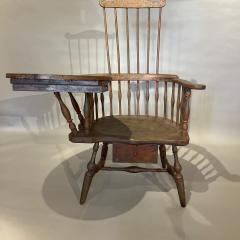
Good ball and ring turnings and two drawers. Old red paint over the original green. Tracy type, Lisbon, CT. Illustrated in Charles Santore's Book. #173 on page 141. Both drawers are early replacements.
Chairs Items
| Chairs |
"A chair is one of the most definitive forms of furniture and a true expression of design and creativity. Great chairs have great lines. This applies to any period or style. If there is a chair you are looking for and do not see, please call or email, we may not have cataloged it yet." |
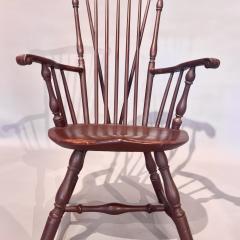
Carved ears, round seat, brace back, knuckle arms vase and rng turnings and tapering legs. Pictured in Charles Santore's Book, "The Windsor Style in America". Vol 1. Page 90.
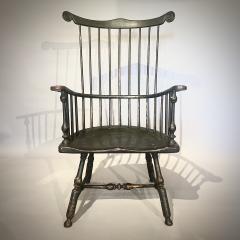
Carved ears, D-Seat, Bold vase and ring turnings, medial stretcher, and blunt arrow feet. Restored black paint and potty seat. Philadelphua, Circa 1775.
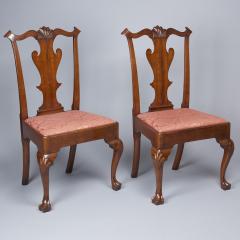
Solid splat, 3 shells, cabriole legs terminating in trifid feet. Pa. Circa 1760-75.
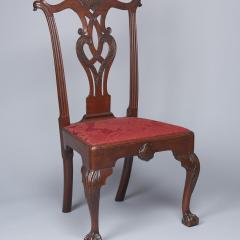
Fluted stiles, rare elaborate carved splat, acanthus carved knees, two shells and cabriole legs terminating in claw and ball feet. Philadelphia,PA. Circa 1760-75.
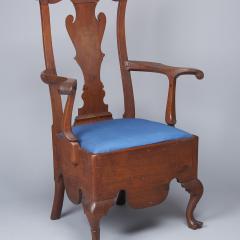
Cupid's bow crest, solid splat, great concave arm supports and carved knuckles. Spooned back, deep scalloped skirts, cabriole legs terminating in trifid feet. Wonderful old patina. Philadelphia, Circa 1775.
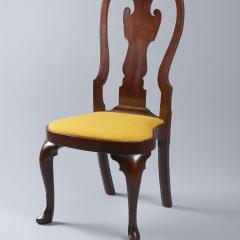
Yoke crest, solid splat, slip seat and cabriole legs terminating in slipper feet. Wonderful stature. Philadelphia, Circa 1740.
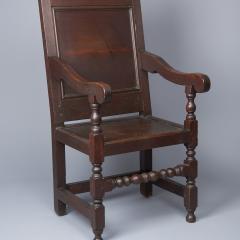
Paneled back and seat. Good turnings on the legs, arm supports, and stretcher; original ball feet. Chester County, PA. Circa 1730-40.
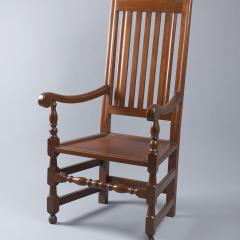
Arched crest, vertical banisters, paneled seat, scrolled arms, and a well turned front stretcher. Turned front legs terminating in ball feet. Feet and seat restored. Defended in the Hoopes Family of Chester County. Pa. Circa 1730.
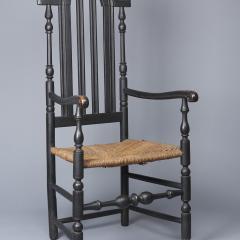
Arched crest, wonderful turnings, molded splat and rush seat. Turned legs terminating in ball feet. Pennsylvania. Circa 1730.
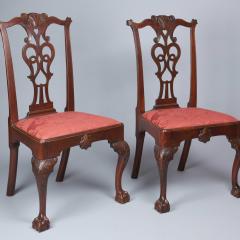
Carved shells and volutes with rare pierced double hearts in the splat. Cabriole legs with acanthus carved knees terminating in ball and claw feet. Philadelphia, Pa. Circa 1765-75.
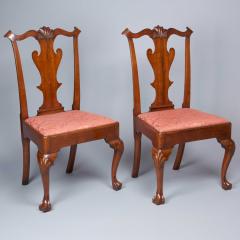
Pair of walnut Queen Anne side chairs with a solid splat, 3 shells, and cabriole legs terminating in trifid feet. Pa. Circa 1760-75.
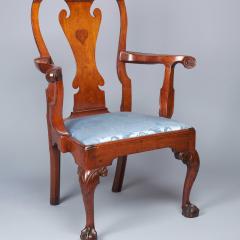
Crest rail with shell and acanthus leaf carving. Solid slat, bold arm supports and knuckles. Cabriole legs with floral and acanthus leaf carving terminating in claw and ball feet. Pa or NY. Circa 1770.
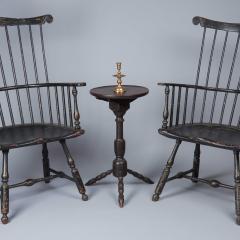
Carved ears, early vase and ring turnings, D-seats and blunt arrow feet. Victorian paint with pinstriping over the orginal paint. Philadelphia, Circa 1760-80.
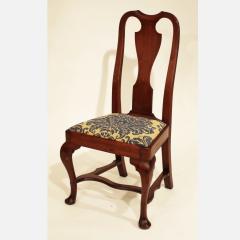
Walnut Queen Anne Side Chair. Yoke crest, solid splat, cabriole legs terminating in a faceted foot, serpentine flat stretchers. Philadelphia, Pa. Circa 1740-60.
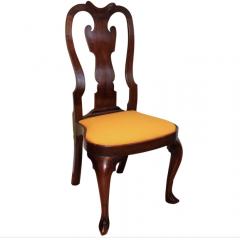
Walnut Queen Anne Balloon Seat Side Chair. Yoke crest, solid splat, slip seat. Cabriole legs terminating in slipper feet. Philadelphia, Circa 1740.
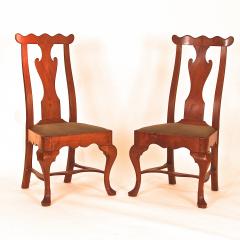
Cupids bow crest, solid splats, cabriole legs terminating in faceted feet. Flat serpentine stretchers and scalloped aprons.
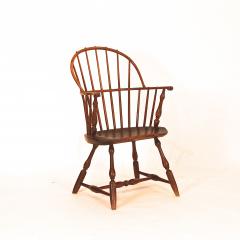
Knuckle arms, well excuted vase and ring turnings and a great turned medial stretcher.
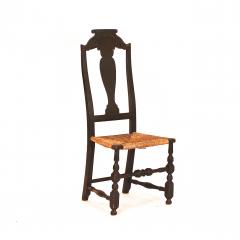
Stepped crest with volutes, solid splat, rush seat, turned legs, stretchers and ball feet. Ball and ring front stretcher. Early black paint over original green. Circa 1720-40.
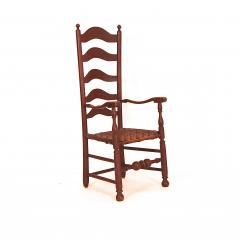
Has original red paint, splint seat, restored ball and ring stretcher, original ball feet. Has a Chester County history.

Good turned ball and ring front stretcher and ball feet. Rush seats with front apron.
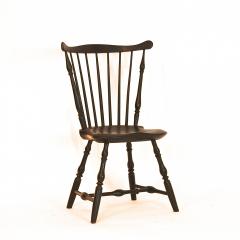
Vase and ring turnings and 20th century black paint. Possibly Samson Barnett of Wilmington, DE. Delaware. 1780.
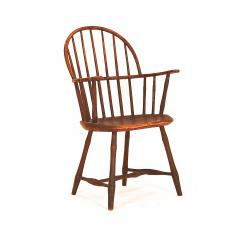
Wonderful old remnants of paint surface still remaining. Bamboo turnings and flat arms.
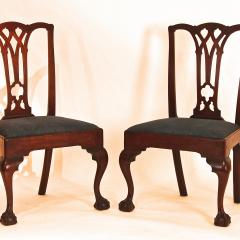
Gothic Splats, slip seats, cabriole legs terminating in claw and ball feet. Excellent condition. Philadelphia. 1775.
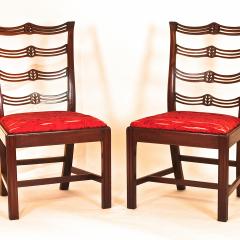
Molded stiles with carving at the crest, carving in the center of the slats, slip seats and straight molded legs.
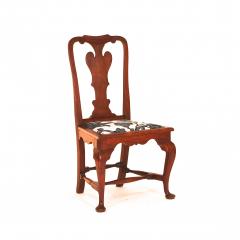
Yoke crest with carved volutes, solid splat. Scalloped aprons, cabriole legs terminating terminating in pad feet, and turned stretchers. Cracks in splat. Bermuda. 1740.
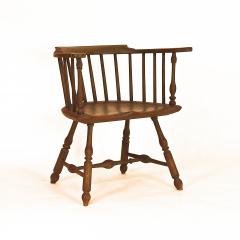
D-Shape seat and great turnings, orginal blunt arrow feet.
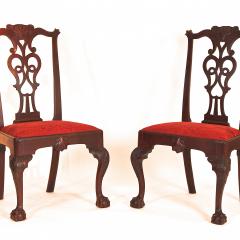
Carved shells and volutes with rare pierced double hearts in the splat. Cabriole legs with acanthus carved knees terminating in ball claw feet. Philadelphia.
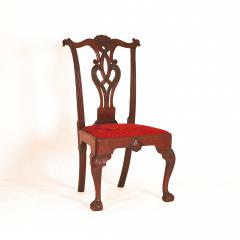
Fluted stiles, rare elaborate carved splat, acanthus carved knees, two shells and cabriole legs terminating in claw and ball feet. Philadelphia.
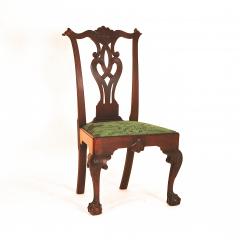
Very unusual shell on the crest, carved volutes on the splat, acanthus carved knees. Cabriole legs with carved voluted knee blocks and terminating in claw and ball feet.
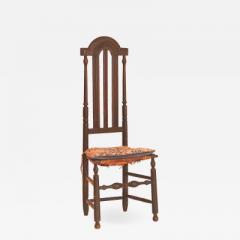
Arched crest, great turnings, molded splat, rush seat. Turned legs terminating in ball feet. Wonderful old grained paint and patina. Pennsylvania. 1730-40.
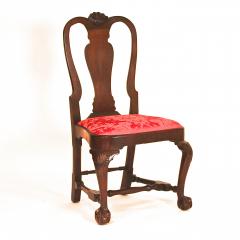
Mahogany Queen Anne balloon seat side chair. Yoke crest with a carved shell, solid splat, cabriole legs with shells and claw and ball feet. Wonderful turned stretchers. Newport or Boston. 1740-50.
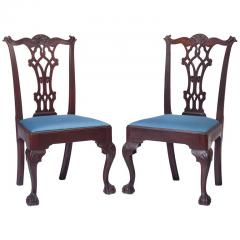
Pair of mahogany Chippendale side chairs. Relief carving on the crest, pierced splat with unusual carving, cabriole legs with shells on the knees, terminating in claw and ball feet. Nice old surface.
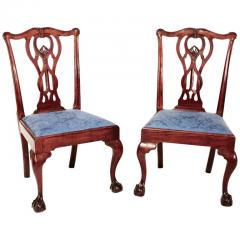
Pair of Baltimore mahogany Chippendale side chairs with wonderfully carved crest rail and pierced Gothic splat with molded stiles cabriole legs terminating in claw and ball feet.
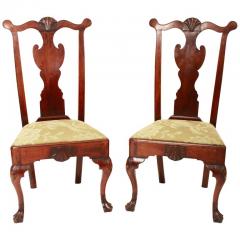
Rare pair of walnut Queen Anne side chairs with carved shell on cupids bow crest rail solid splat a shell carved on front rail and tulip style carving on the knees cabriole legs terminating in trifid feet. Made in Bucks or Montgomery County PA.
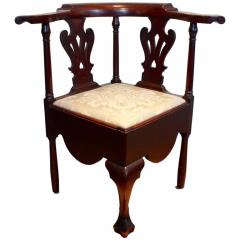
Walnut Queen Anne corner chair with a wonderful old patina, pierced splats with hearts, deep scalloped skirts with turned arm supports and three turned legs with one front cabriole leg terminating in a Trifid foot.
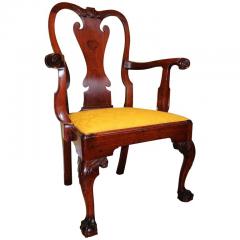
Walnut Chippendale armchair with carved shell and streamer crest rail solid splay with inlaid heart carved legs with flowers on knee blocks and terminating in claw and ball feet.
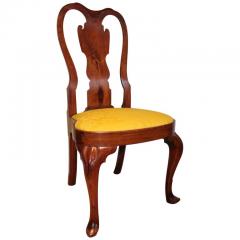
Philadelphia walnut Queen Anne balloon seat side chair with Savery style knees terminating in slipper feet.
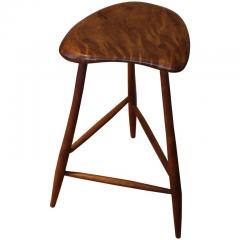
Stool with cottonwood crotch seat and hickory legs signed W.E. and dated 1958 and still retaining its original paper label underneath for Esherick's studio in Paoli PA.
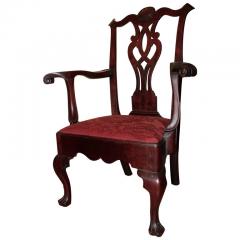
Cupids bow crest with a carved shell pierced splat and bold arm supports ending in carved knuckles with cabriole legs terminating in trifid feet.
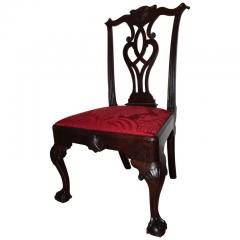
A very fine Chippendale side chair with a great old patina multiple shells on the crest rail and knees with wonderfully carved volutes on crest rail and knee blocks, fluted stiles and cabriole legs terminating in claw and ball feet make this a very exiting and appealing chair.
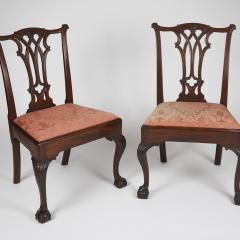
Excellent pair of walnut chippendale side chairs. Nicely carved crest rail and gothic splat, acanthus carved legs terminating in claw and ball feet.
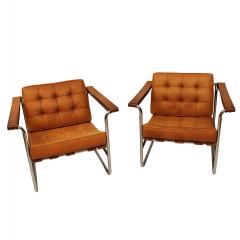
This mid modern pair of leather and chrome lounge chairs were desgined by Karl Thut of Switzerland and imported by the Stendig company. The chairs are uphostered in cognac brown leather with buttoned cushions.
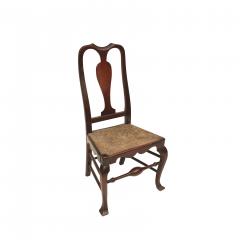
From the school of William Savery, this Maple Queen Anne side chair has a yoke crest, a solid spooned splat, a rush seat and cabriole legs terminating in "crook t" feet. This chair descended from the Ely family of New Jersey.
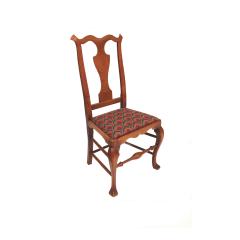
This Maple Queen Anne side chair has a cupid’s bow crest, a solid spooned splat and cabriole legs terminating in “crook’t” feet. This side chair also has a bobbin front stretcher.
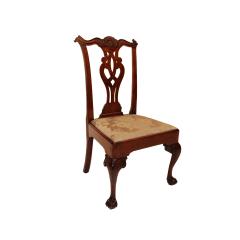
This Walnut Chippendale side chair has a cupids bow crest with scrolled ears and a carved cabochon shell in the center. It has a pierced splat, a trapazodial seat with gold silk damask, and cabriole legs with acanthus carved knees terminating in claw and ball feet.
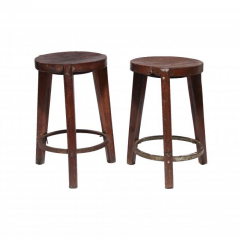
Pair of teak circular stools with wood seat, three flared legs and metal ring support. Punjab University, Chandigarh, India, c. 1965. Le Corbusier Pierre Jeanneret: The Indian Adventure, Design-Art-Architecture, Touchaleaume and Moreau, pg. 560.
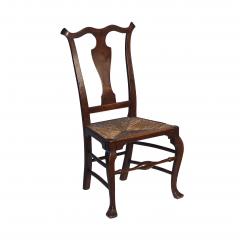
This maple side chair is attributed to William Savery. It has a cupid’s bow crest, spooned back with solid splat, rush seat, aprons and cabriole front legs terminating in “crook’t” feet. The front stretcher is bobbin-turned.
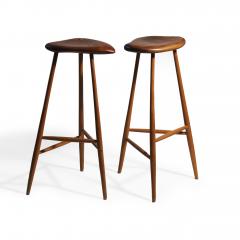
Slender turned legs with a hand carved free form seat. The delicate form is indicative of the simplistic and utilitarian form that Esherick is known for. They were made by Horace B. Hartshaw, an assitant of Wharton Esherick. Signed and dated on seat.
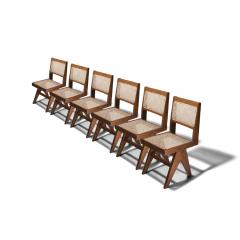
Each have a caned seat and back, V-Type flared triangular legs and stretchers. Chandigarh, India, c. 1959. Dimensions: H 33.5-35" x W 16". x D 19" x SH 17". Le Corbusier Pierre Jeanneret: The Indian Adventure, Design-Art-Architecture, Touchaleaume and Moreau, pg. 561. (PJ-SI-25-A).
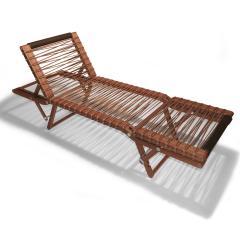
A pair of rare and desirable Pippa lounge chairs designed by Hermes. As with everything Hermes, these lounge chairs epitomize the elegance. These lounge chairs are no longer offered by Hermes.
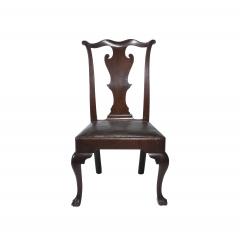
This chair has a sculptural quality to it. With it's old finish and original leather seat, this chair has character. Elegant in form, this chair bears all the clasic hallmarks of the Queen Anne form.
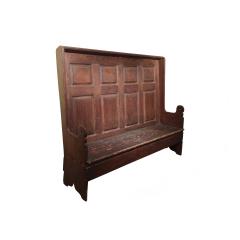
A rare example of early American craftmanship, this settle has raised panels on the back, scalloped arms and boot jack ends.
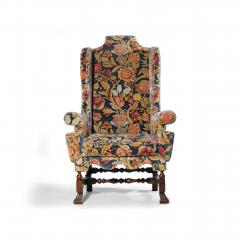
A unique piece designed to interpret what would have been an American William & Mary wing chair had one been known. Finely upholstered in a colorful "turkey-work" pattern, this wing chair has a nicely shaped crest, scalloped wings, rolled arms and an impressive base with turned stretchers and legs over Spanish feet. This wing chair makes a statement in any room.
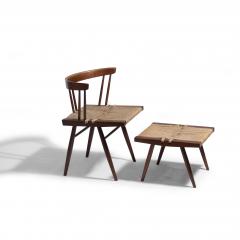
One of the more distinguishable designs from the studio of George Nakashima, this grass-seated side chair has a shaped crest rail with six flared spindles adjoined to an interwoven sea grass seat. Four flared legs are joined by simple stretchers. The rectangular stool with this side chair frames a sea grass center in walnut with flared legs. This chair and stool both have a...
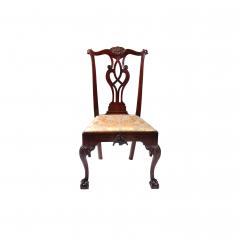
An exceptional example of a Philadelphia side chair. Pictured in Horner's Blue Book (plate #71, p. 153) and American Chairs by John Kirk (plate #68, p. 79),...
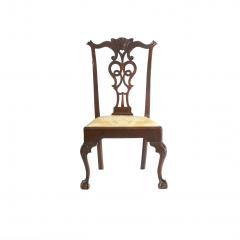
An exceptional example of a Philadelphia side chair. What makes this particular chair exciting are duel inverted hearts on the pierced splat. In addition, it has a cupids bow crest with carved ears and shell with fan in the center flanked by volutes. The pierced splat has carved volutes and a silhouetted hearts, a trapazoidal seat with gold silk damask, cabriole legs with...
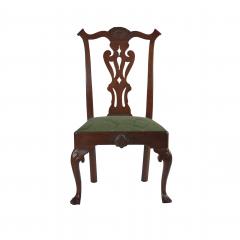
This side chair is adorned with carving. At the center of a cupids bow crest is a finely carved cabachon over a pierced splat intersecting with a trapazoidal seat with a carved shell at the center. Cabriole legs with carved shells terminate to trifid feet.
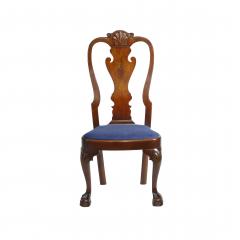
This outstanding side chair has volutes on the crest rail which descends to a solid splat with a spooned back. The balloon seat sits above cabriole legs with shells on both knees. The legs terminate in claw and ball feet.
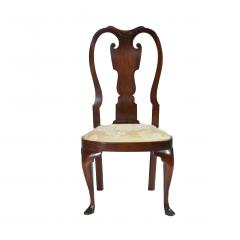
An elegantly constructed Queen Anne side chair with yoke crest, solid spooned splat and cabriole legs terminating in slipper feet.
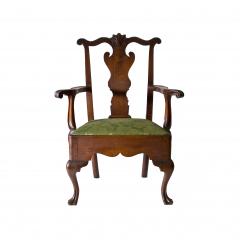
This armchair combines the elegance of the Queen Anne period with an exceptional old finish. It has a boldly carved shell in the center of a cupid's bow crest with a solid splat, nicely carved knuckle arms, a scalloped apron and cabriole legs terminating in trifid feet.
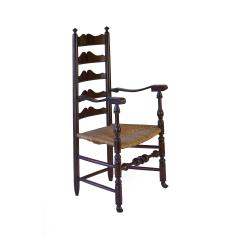
Chair with five arched slats, rush seat and turned front legs terminating in pad front feet. Front stretcher with bold ball-and-disc turnings.
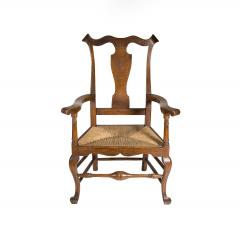
Armchair attributed to William Savery. Chair with cupid’s bow crest, vase-shaped splat, scrolled arms, scalloped aprons, bobbin-turned front stretcher and “crook’t feet.”
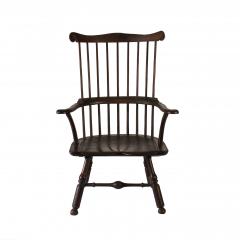
Although many of the elements of this armchair are typical of Philadelphia windsors, this one stands alone. Nicely carved ears flank the crest rail which connects to hickory spindles binding into a walnut riser joining two nicely shaped arms supported by elegant serpentine supports. The walnut D-seat sits over boldly turned legs joined by an H-stretcher with vase and ring turnings...
